




Collaborative Human-AI Symbiosis (II)
 Location: Grand Ballroom E-K
 Time: October 6, 2026 | 10:30 AM - 12:00 PM
Overview
Artificial Intelligence (AI) is increasingly embedded within our everyday life and transforming society at an unprecedented pace. As it becomes more capable of independent reasoning and decision-making, the challenge is no longer solely technological but one of assured collaborations between humans and AI. The issue is whether the two parties can effectively, safely and ethically collaborate. To address the issue and the multidisciplinary scientific, engineering, and societal needs, SMC Society (SMCS) initiated a Collaborative Human-AI Symbiosis (CHAIS) project in 2025. The objective is to establish frameworks, standards, best practices, interdisciplinary approaches, and community roadmaps for trustworthy human-AI partnerships. Built on successful CHAIS workshops, panels, and summer school at the IEEE SMC conference, IEEE AI conferences, and Human-Machine Systems conferences in 2025-2026, this panel is a premium event for engaging with CHAIS world leaders from academia, industry, and government organizations. The panel will identify challenges from previous CHAIS activities, and discuss limitations, opportunities, and future directions for trustworthy human-AI collaboration across diverse application domains including transportation and financial industries, defence and public services, digital twin, robotics, and autonomous systems.
Key Discussion Themes
 |
AI Limitations and Opportunities in the topic areas
|
|
CHAIS Challenges for Academia, Industry, and Government sectors
|
|
Way forward for SMCS/IEEE
|
Topics and Panelists
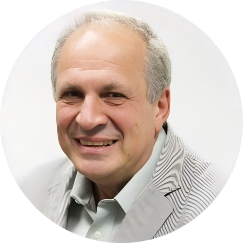
Topic: Shared Control to Full Autonomy: Navigating the Technical Realities of Driverless Cars
Dr. Dimitar Filev is a Senior Henry Ford Technical Fellow in Control and AI at Ford Motor Company (retired). He is currently a Distinguished Fellow at the Hagler Institute for Advanced Studies, Texas A&M University. His research is focused on computational intelligence, AI and intelligent control, and their applications to autonomous driving, vehicle systems, and automotive engineering. He holds 146 granted US patents and has over 200 publications, h-index of 67. He has been awarded 6 times the Henry Ford Technology Award, the 2025 IEEE Technical Field Award for Emerging Technologies, the 2015 IEEE Computational Intelligence Pioneer’s Award, the 2008 IEEE Systems, Man, and Cybernetics Norbert Wiener Award. He was inducted into the Hall of Fame of the Vehicular Technology Society. Dr. Filev is a member of the National Academy of Engineering and a Life Fellow of the IEEE. He was President of the IEEE SMC Society (2016-2017). He received his PhD. in Electrical Engineering from the Czech Technical University, Prague in 1979.
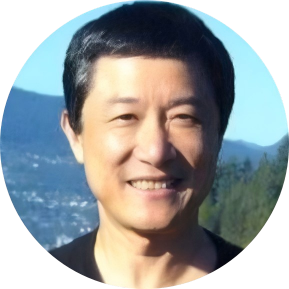
Topic: Trends of Artificial Intelligence in Finance and High-Tech
Dr. Li Deng is a Fellow of the Canadian Academy of Engineering and a Life Fellow of the IEEE. He was a professor at the University of Waterloo and the Chief Scientist of AI at Microsoft in Seattle. He received the 2019 IEEE SPS Industry Leader Award “For leadership in pioneering research and development on large-scale deep learning that disrupted worldwide speech recognition industry and for leadership in natural language processing and financial engineering,” and 2015 IEEE SPS Technical Achievements Award for “Outstanding Contributions to Automatic Speech Recognition and to Deep Learning”. He currently serves as the Chief AI Officer and Global Head of Machine Learning at Vatic Investments.
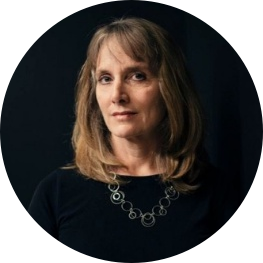
Topic: Remote Supervision of Self-driving Cars
Professor Mary (Missy) Cummings received her B.S. in Mathematics from the US Naval Academy in 1988, her M.S. in Space Systems Engineering from the Naval Postgraduate School in 1994, and her Ph.D. in Systems Engineering from the University of Virginia in 2004. A naval officer and military pilot from 1988-1999, she was one of the U.S. Navy's first female fighter pilots. She is a Professor in the George Mason University College of Engineering and Computing and directs the Mason Responsible AI program as well as the Mason Robotics PhD program. She is an American Institute of Aeronautics and Astronautics Fellow and a member of the Virginia Academy for Science, Engineering and Mathematics. Her research interests include the application of artificial intelligence in safety-critical systems, assured autonomy, human-systems engineering, and the ethical and social impact of technology.
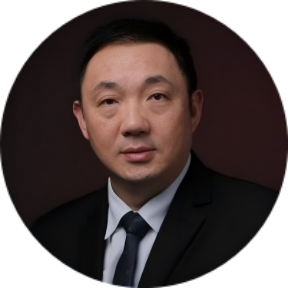
Topic: AI in Autonomous Systems and Cyber-Physical Systems
Professor Yang Shi is a Fellow of the Royal Society of Canada, Canadian Academy of Engineering, Engineering Institute of Canada, American Society of Mechanical Engineers, Canadian Society for Mechanical Engineering and IEEE. He is also the Editor-in-Chief, IEEE Transactions on Industrial Electronics and Past Vice-President, IEEE Industrial Electronics Society (2022-2024). Professor Shi directs Applied Control and Information Processing Lab at the University of Victoria, Canada. His work covers advanced engineering fields of networked and distributed systems, model predictive control, cyber-physical systems, industrial automation security, robotics, mechatronics, and autonomous systems. Professor Shi is the recipient of 2024 IEEE Canada Outstanding Engineer Award and 2023 IEEE Dr.-Ing. Eugene Mittelmann Achievement Award.
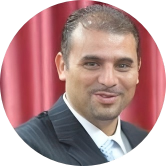
Topic: Embodied AI, Digital Twins, & Mixed Reality
Professor Abdulmotaleb El Saddik is a global pioneer in AI, digital twins, haptics, and multimedia communications. By integrating AI with immersive technologies, he bridges the physical and digital worlds, delivering innovative solutions that accelerate digital transformation across key sectors. His AI-driven work enhances industrial efficiency, revolutionizes education and healthcare through intelligent and immersive technologies, and enriches societal experiences. Dr. El Saddik has written over 600 articles and has led more than 50 conferences. He has also mentored over 170 researchers. He has won many top awards, including the A.G.L. McNaughton Gold Medal and ACM Distinguished Scientist Award and Fellowships in the Royal Society of Canada and the Canadian Academy of Engineering and IEEE. His work shows his commitment to using technology to make life better for everyone.
Moderator
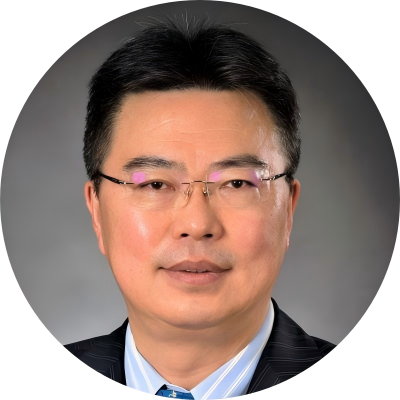
Dr. Ming Hou is a Fellow of the Canadian Academy of Engineering, Engineering Institute of Canada, and IEEE. He is a Principal Scientist and National Leader of Human-Technology Interactions within the Department of National Defence, Canada. As the Co-Chair of an International Human-Autonomy Teaming (HAT) Specialist Committee, he leads the standardization process with industry and government authorities from 40+ countries for AI-enabled autonomous systems. His book entitled “Intelligent Adaptive Systems – An Interaction-Centered Design Perspective” has been instrumental in the development of national HAT R&D roadmap, novel industrial autonomy technologies, international standards, and the United Nations’ White Paper on autonomous systems. Dr. Hou is the recipient of the most prestigious Defence Science and Technology Excellence Award in 2020, the President’s Achievement Award of the Professional Institute of the Public Service of Canada in 2021, and the IEEE Outstanding Contribution Award in 2024. He is the General Chair of the 2024 IEEE International Conference on Human-Machine Systems (ICHMS), 2024-2025 International Defence Excellence and Security Symposium, and Honorary Chair of ICHMS 2026 and 2027. Dr. Hou is also an Adjunct Professor at the University of Toronto and University of Calgary, Canada.
Why you should attend
For scientists, engineers, practitioners, designers, students, and anyone interested in building and using 21st century human-AI symbiotic technologies, including:
|
Understanding the state-of-the-art CHAIS concepts, challenges, and opportunities;
|
|
Engaging with world leaders in CHAIS related areas; and
|
|
Networking with panelists and broad audience.
|


@ Copyright - IEEE SMC 2025
Terms & Conditions lEEE Privacy Policy
@ Copyright - IEEE SMC 2026
